Turning operational constraints into 40% more orders
Designing for scale by simplifying choices & targeting the specific user base
Team
Uday, PD
Akash, PD
Ram, Founder
Suraj, Dev
Umag, Dev
Hardik, BA
Timeline
Oct 2025 - Nov 2025
Context
About CMP
Despite steady traffic, Craft My Plate was struggling with low conversions and shrinking margins, especially for small and mid-sized events. Users were dropping off at checkout, and operational costs were increasing with every order. Customer satisfaction was also declining, indicating deeper issues in the experience.
How might we increase conversions for small-event users without adding complexity to an already strained operational system?
Research
To understand and get more insights on what exactly is going on, we did
Mixpanel funnel analysis
Session recordings analysis
Customer calls
Sales team feedback
Order data analysis (3000+ orders data)
Operation team interviews
Guest count wise split
40%
10 - 25 guests
35%
26 - 80
guests
15%
81 - 150 guests
10%
151 - 1500+ guests
User Insights
Customisation was working well with large gathering events
The fluctuation of event cohorts (based on orders)
Seasonal - 30 (small) : 70 (large)
Non seasonal - 80 (small) : 20 (large)
Pricing felt too high for the small event size
For smaller events, users didn’t want more flexibility, they wanted faster, more confident choices with predictable outcomes.
Users experienced price shock at cart
Business Insights
Very low margin on the orders with all the vendors
Operational inefficiencies (missing items, improper packaging, packaging delays)
Vendor inefficiencies (quantity mismatch, bad taste, wrong items prepared)
Delivery delays (operational inefficiencies leading to delay)
Drop in retention, second time order customers and customer satisfaction score
Our approach
Optimising price within existing system
1
Rejected
Rejected
2
Assistive customisation
Approved
3
Introducing new offering
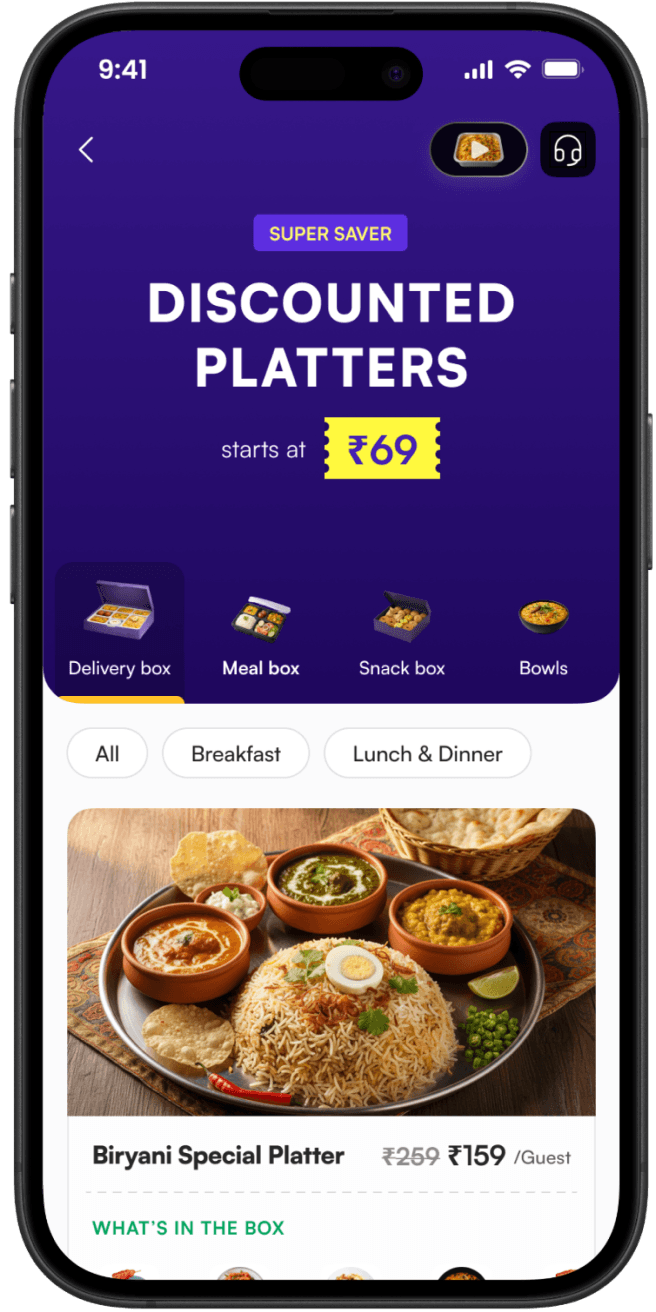
Introducing new offering - Discounted platters
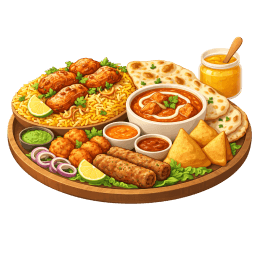
Best selling tailored fixed platters (No customisation)

Optimised platters for small events (10 - 25+ guests)

Reduced decision fatigue for the users

Improved operational efficiency (Bulk cooking decreases the cost)

Targeting year long small events (Birthdays, house parties, kitty parties, etc..) segment
Validating
On paper our approach felt good, but we want to test it with our customers. So we ran a pilot of this discounted platters with our customers (high intent leads) via Instagram as a source (high new customer source). Week 1 we tested it with our sales team dealing offline customers and later we made it to the app and tested out with our new users
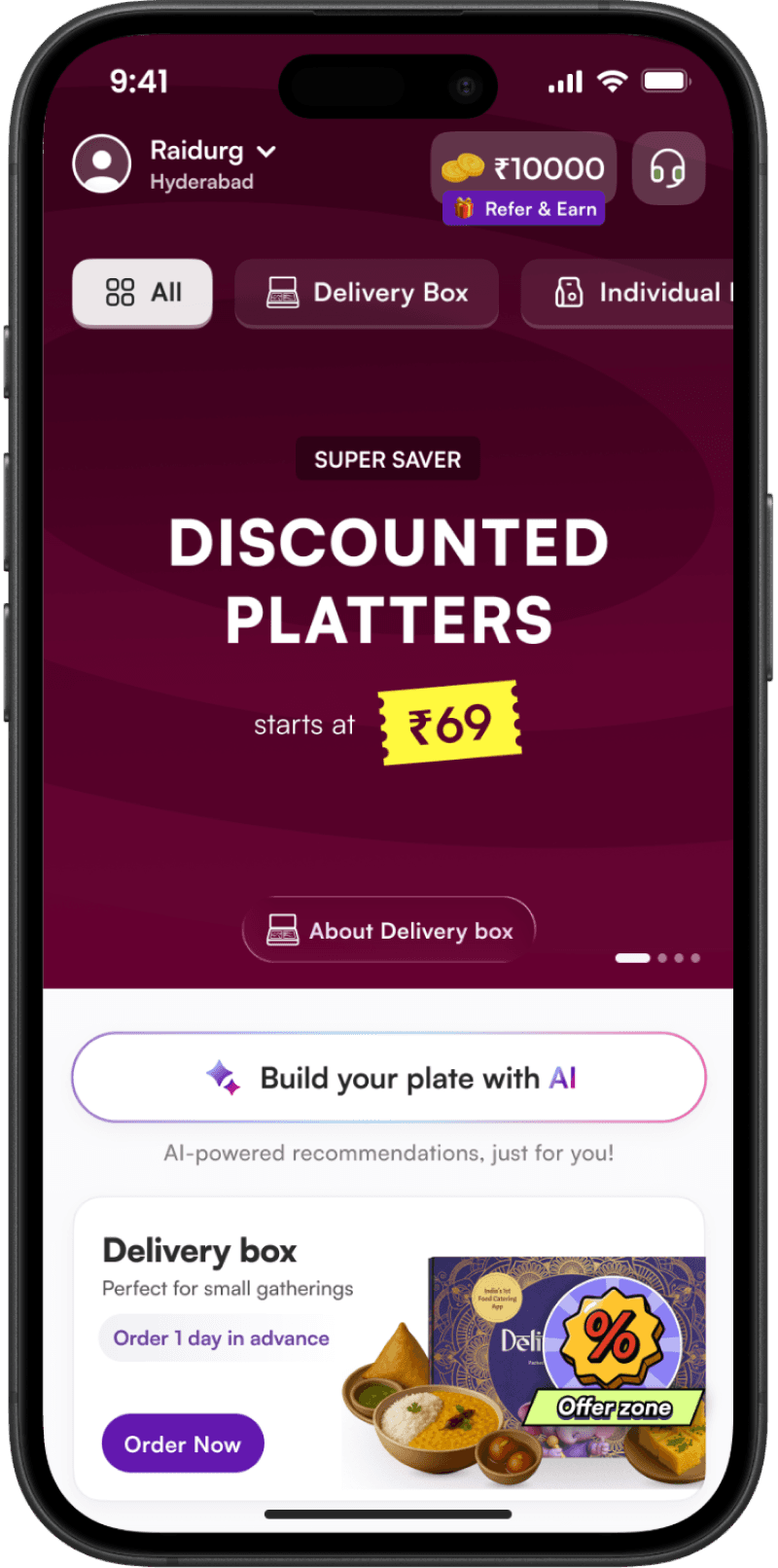
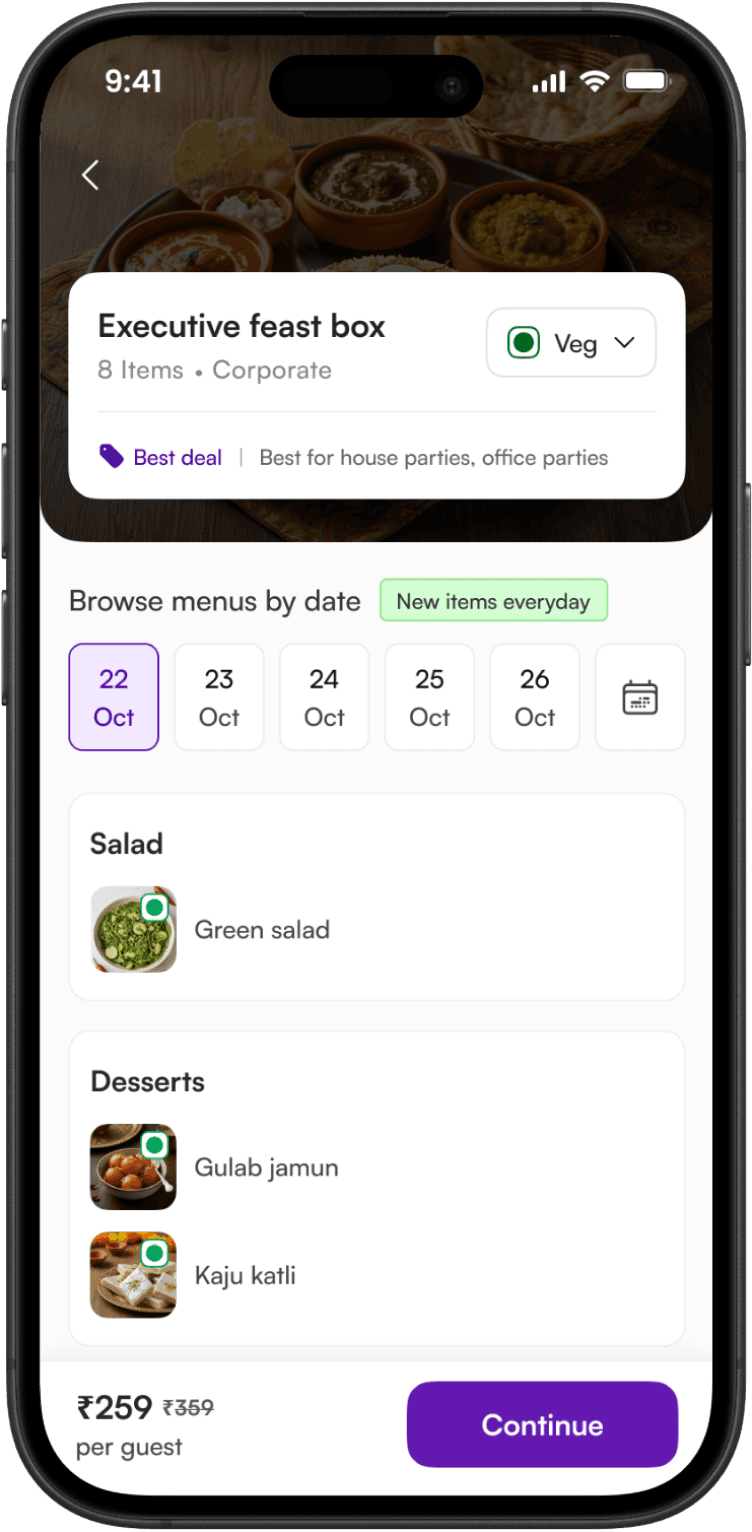
What worked
Strong interest from price conscious users
Faster decision making compared to usual service offerings
Improved conversions in sales led flows (assisted pilot test)
Better costs & operational predictability
What didn’t work
Users still explored regular platters before converting
Daily variety menus (change in items)
Limited choices for certain users
Positioning of this offerings in the app was not noticeable enough
We got 2x more corporate recurring orders for 6 months (everyday, weekly twice, monthly twice). It worked as intro for the most corporate deals
Discounted platters
Based on validation, Discounted platters introduced as a simplified, high conversion way for small gathering events, reducing both decision effort for users & operational complexity for the business. Instead of increasing the customisation, we shifted to pre curated, reliable options which are directly addressing price sensitivity, choice overload & operational inconsistencies. Main goal wasn’t to reduce price but to reduce the cost of decision making, enabling faster, more confident user choices, scalable execution
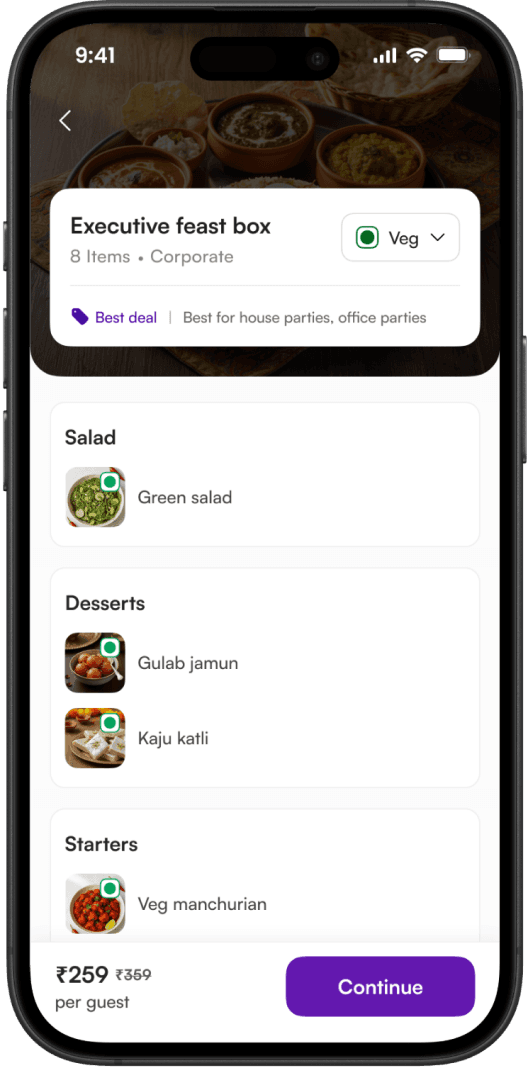
Pre-curated menus, no customisation
Clear all inclusive prices (excluding delivery charges), no price shock in cart
Optimised for the small event gatherings (10-25 guests)
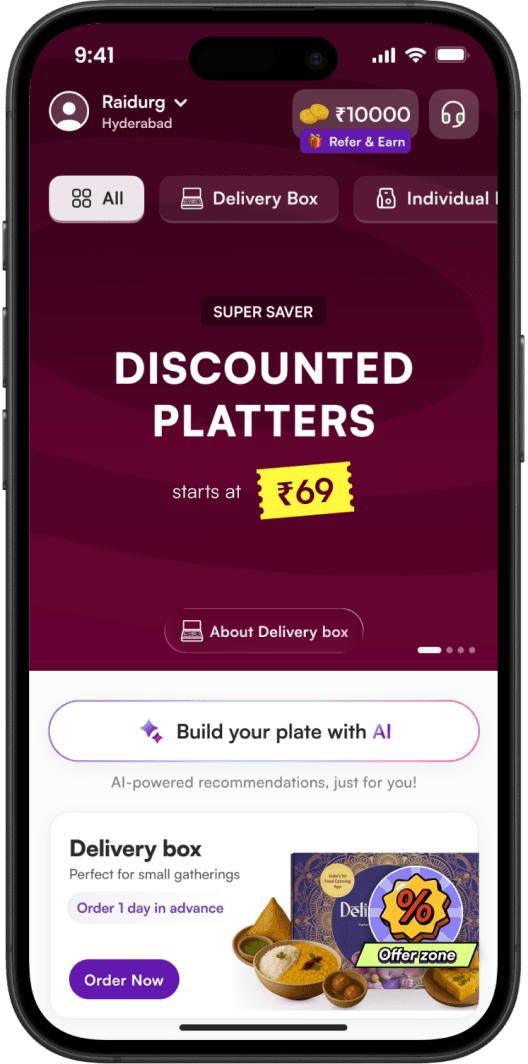
Focused entry point in the app
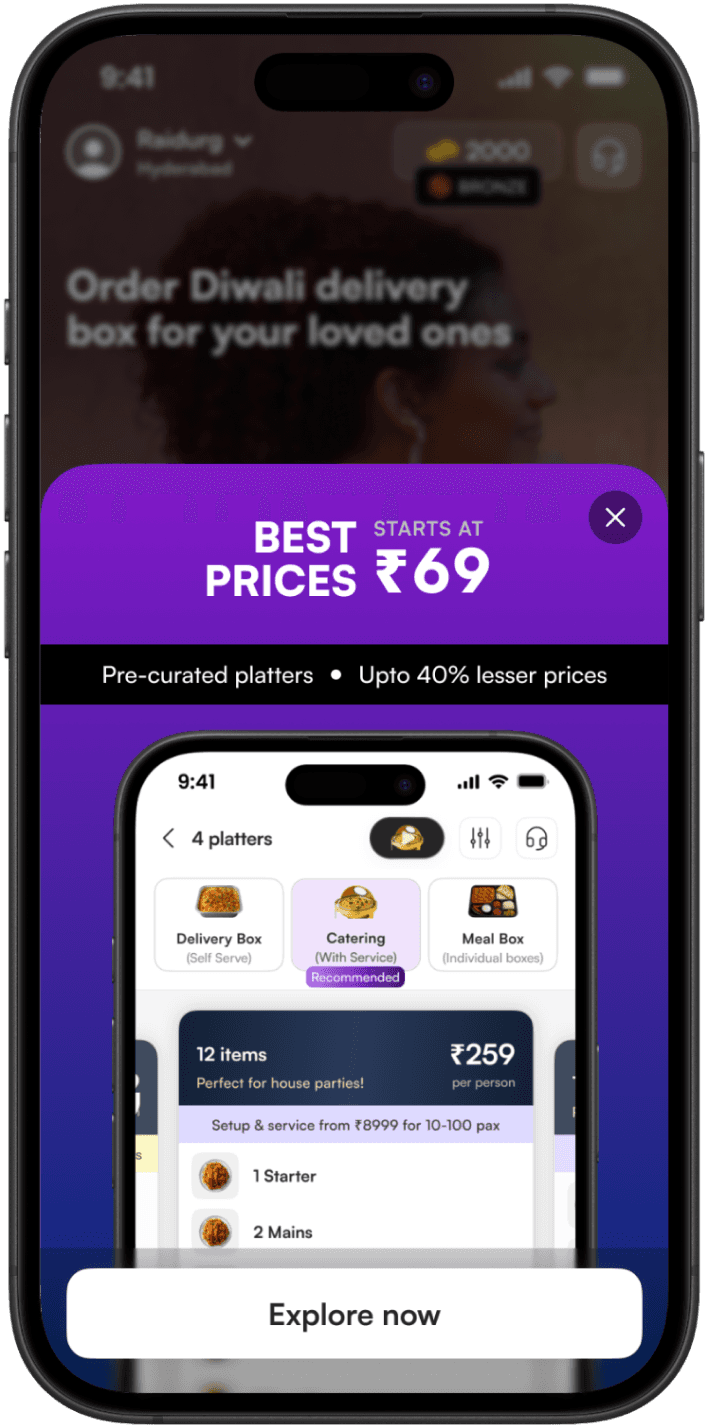
Positioning
Discounted platters positioned as fast, affordable options for the small gatherings, targeting users -
Price conscious users
Time constrained
Less concerned about deep customisation
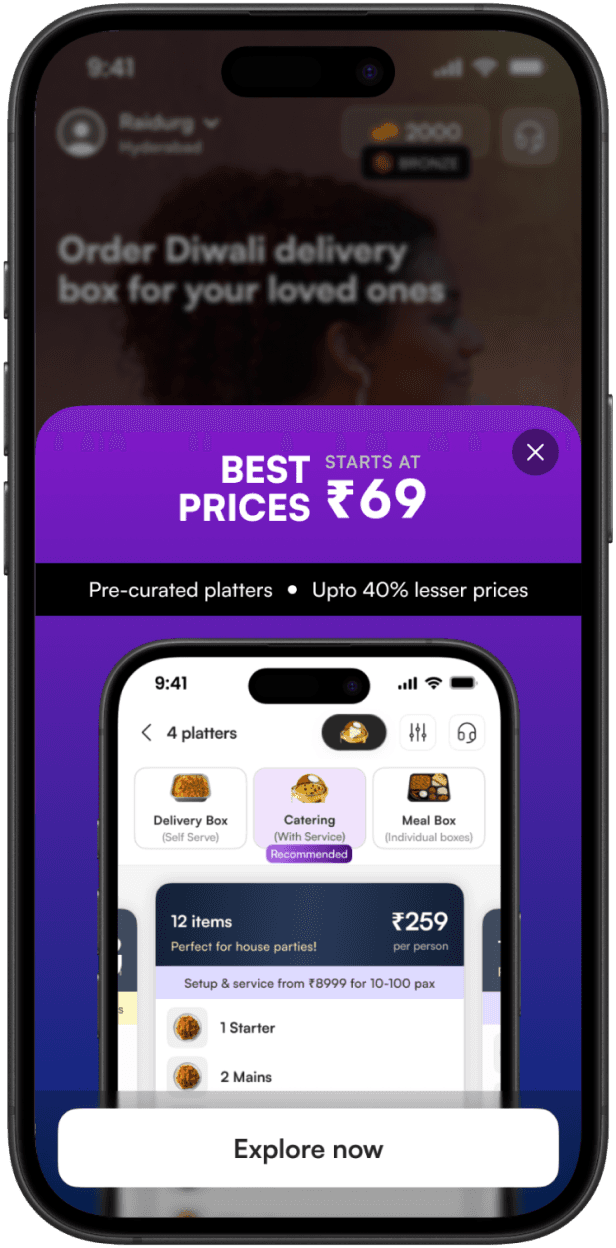
Transition bottom sheet
Home page

Offer zone
Optimising menu structure for scale
We analysed 3000+ CMP orders and collaborated with sales and operations teams to understand how menu choices varied across event types, guest counts, and pricing constraints. The existing system offered high flexibility but led to inconsistent selections and operational inefficiencies. To address this, we restructured the menu into pre-curated platters aligned with high-frequency ordering patterns and operational feasibility.
This resulted in:
Reduced cognitive load for users
Faster decision-making
Improved vendor output
Better cost control and higher margins
Tradeoffs
We made conscious tradeoffs to prioritise simplicity and scalability
Reduced flexibility for users seeking deep customisation
Potential drop in AOV for certain segments
Risk to brand perception as a “premium” service
Impact
Discounted platters drove strong improvements across conversion, retention, and operational efficiency, validating the hypothesis that simplifying choices and pricing would unlock higher user intent and more scalable execution.
40%
Increase in orders
(pilot + roll out)
~20%
Reduction in cart drop offs
2x
Reduced decision time
25%
Improved margins
(pricing + predictability)
Metrics are indicative (adjusted due to NDA)
What happened next
Discounted platters surpassed the initial KPIs and became the primary acquisition and conversion lever for small-event users, as it'scontributing significantly to overall order growth. It also helped bring greater consistency to vendor operations, making the system more predictable and scalable, and continues to be iterated upon as part of the product’s evolution.
My role
I led the end-to-end design for this initiative in its initial phase, working closely with the founder to shape the core experience. The solution was later expanded as part of the product roadmap.
Learnings
For price conscious users, confidence and trust matters more than flexibility
Reducing choices can improve conversion when decision cost is higher
Product complexity directly impacts operational efficiency, not just user experience
Designing for scale often requires simplifying the offering, not enhancing it